Running HVAC systems in large commercial buildings can be expensive, with high energy use and frequent maintenance adding to costs. Businesses feel pressured to find ways to save without losing comfort or performance.
This article shares 10 simple and effective tips to lower HVAC operating costs in large commercial buildings. Whether you manage a system yourself or use a commercial HVAC service in Houston, these ideas will help you save money and keep your system running efficiently.
Key TakeawaysTo reduce HVAC operating costs in large commercial buildings, follow expert tips. Here are the key ways to reduce HVAC operating costs:
Consult Texas Central Air or other experts to monitor and find out the inefficiencies of your HVAC and treat them to reduce costs. |
Reasons for Higher HVAC Operating Costs in Large Commercial Buildings
The HVAC operating costs in large commercial buildings may become higher than usual. It happens for several key reasons. The potential reasons for higher HVAC operating costs in large commercial buildings are:
- Lack of maintenance
- Avoiding maintenance activities to save money
- Leaky ductwork or bad insulation
- Using oversized or undersized HVAC systems
- Lack of smart controlling access
- Faulty or malfunctioning components
To reduce such costs, consult an HVAC professional like Texas Central Air.
10 Expert Ways to Reduce HVAC Operating Costs
If you want to minimize the operating costs of the HVACs in large commercial buildings, follow these tips:
1. Conduct Routine Maintenance Activities
Proper and regular maintenance is the most important and effective way to reduce extra costs. The maintenance activities include cleaning all the parts and components well, replacing air filters regularly, treating the leaks or cracks, lubricating, maintaining refrigerant levels, etc.
Commercial HVAC services ensure your HVAC is working smoothly without stressing out. So, the energy bills remain stable and you can avoid extra operating costs.
2. Incorporate Energy Efficient Solutions
By incorporating energy-efficient solutions, you can reduce the unnecessary costs of your HVAC. They consume less energy and keep the HVACs efficient. Some energy-efficient solutions for large commercial buildings are:
- High-efficiency HVAC systems with Energy Star certification and a high SEER 2 rating
- Variable Frequency Drives to regulate the fan, pump, or compressor speed
- Smart Thermostat to automatically adjust the temperature and save energy consumption when the place is vacant
- Energy Recovery Ventilators for balanced airflow and moisture
- Zoning system to eliminate energy wastage
- Solar-powered HVAC systems to reduce pressure on the grid electricity
3. Ensure Proper Sealing
Proper sealing reduces HVAC operating costs in large commercial buildings just like any other space. Any leaks or cracks in the ductwork let the conditioned air escape and unconditioned air enter. It ultimately makes the HVAC inefficient and pushes it to work harder. As a result, the bills get higher.
So, properly seal the ductwork, with mastic sealant or metal-backed tape. Weatherstrip and caulk the doors and windows. Consult a professional who is experienced with commercial HVAC services in Houston like Texas Central Air to help you with sealing.
4. Optimize Insulation System
An effective insulation system is necessary for large commercial buildings. It helps to keep the conditioned air inside the commercial space. It reduces the burden on the HVAC systems. It makes the HVAC system energy efficient and reduces operating costs.
So, insulate the ducts, walls, and roofs. You can use spray foam, fiberglass, or rigid foam boards to minimize heat loss or gain. Ask your professional for customized suggestions to insulate properly.
5. Adopt Building Automation Systems
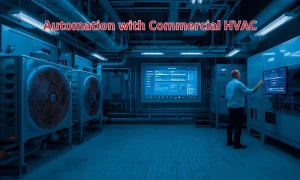
Building Automation Systems work to monitor and control the building’s HVAC and other systems. It is mostly popular for large commercial buildings. The system can help you optimize energy usage and reduce needless energy wastage.
This system automatically monitors the indoor environment conditions and adjusts accordingly. You do need not to adjust anything manually. So, it will optimize efficiency and reduce costs.
6. Incorporate Zoning Systems
Usually, the whole building does not require the same temperature or the same level of attention. Many parts of it may stay vacant most of the time. Also, different work activities require different types of temperature settings.
So, if you divide the whole space into different zones and control the temperature accordingly, you can get proper service at the right place. Also, zoning saves energy by leaving out unoccupied or low-usage zones.
7. Use High-Performance Window Films
Even after insulating and sealing, windows can gain or lose indoor heat quite easily. The extra heat creates pressure on the HVAC system. The extra stress leads to higher energy consumption and higher bills.
Use high-performance window films to block the solar heat in summer and retain warmth in winter. Additionally, these films block the UV rays and protect the windows from damage.
8. Install Programmable or Smart Thermostats and Regularly Inspect Them
Both programmable and smart thermostats can be efficient to control the temperature. For commercial buildings, smart thermostats are a better choice. It can automatically adjust the temperature. You can also get remote access to monitor and control it through your smart device. It can track the energy consumption as well.
However, regular inspection is required for all kinds of thermostats. Ask Texas Central Air or any other professional to check if the thermostat is showing accurate readings or not. It is essential to keep the HVAC efficient.
9. Use ERVs
ERV or Energy Recover Ventilator is a ventilation system that improves indoor air quality and saves energy at the same time.
Besides replacing the stale air, ERVs preheat or prewarm the fresh air before passing indoors. Sometimes, they also add/remove moisture. This process saves a lot of energy. For large commercial buildings, the savings add up to a considerable sum.
10. Conduct Energy Audits
Regular inspections and energy audits are important. These audits help you identify the inefficiencies of your HVAC. They also compare the overall energy usage from month to month. By identifying the inefficiencies, you can take steps to sort the issues accordingly.
Texas Central Air provides commercial HVAC services in Houston. You can consult them to monitor the energy consumption and address the inefficiencies of your system.
Final Thoughts
Commercial buildings often have high HVAC costs. Follow these expert tips to lower HVAC costs. Regular inspections and maintenance are essential for checking all parts and keeping the system efficient.
Sealing, insulating, and using smart technology can also reduce operating costs. Contact Texas Central Air or other experts to find and fix any inefficiencies.